




Tax sale and public property research work differently from ordinary foreclosure listing research. Investors may need to review tax lien sales, tax deed auctions, county-held certificates, adjudicated properties, surplus federal property, and other public-sale records. These sources can involve unpaid taxes, redemption periods, title questions, public claims, and county-specific rules. This article focuses on research sources and auction platforms, not legal, tax, or financial advice. Every property should be checked against county records, sale terms, title status, and local requirements before any bid or outreach.
The companies below cover separate parts of tax sale and public property research. ForeclosureHub gives investors a foreclosure-first research layer before they move into tax sales or public auction sources. GovEase, RealAuction, CivicSource, LienHub, and Tax Sale Resources cover tax lien, tax deed, tax certificate, and tax-distressed property research from different angles. RealEstateSales.gov adds a federal surplus property route that does not belong in a normal foreclosure listing article. Here is the role of each source before the full review:
- ForeclosureHub: Foreclosure-first property context, owner data, skip tracing, alerts, and records;
- GovEase: Online tax lien and tax deed auction platform;
- RealAuction: Tax lien, tax certificate, foreclosure, and sheriff sale auction software;
- CivicSource: Tax-distressed and adjudicated property auction source;
- LienHub: County-held certificates and tax certificate access;
- Tax Sale Resources: Tax lien, tax deed, and redeemable deed research data;
- RealEstateSales.gov: Surplus federal real property sales.
This article is about finding and checking public-sale property sources, not promising easy returns. The cleaner approach is to understand the sale type first, then review the property and local rules around it.
1. ForeclosureHub
ForeclosureHub is a foreclosure-focused property search platform for investors.
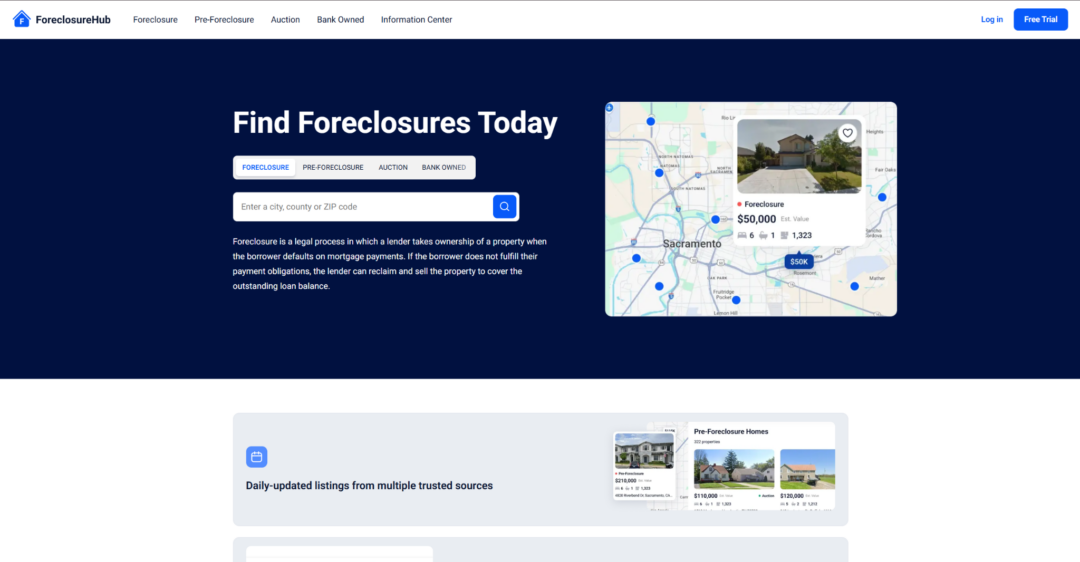
ForeclosureHub takes the first position because tax sale research often works better when users first understand the broader distressed-property context. Users can search pre-foreclosure, foreclosure, bank-owned, and auction listings across the United States. The ForeclosureHub tax sale research tool gives users a focused way to review distressed-property data before comparing outside public-sale sources. The platform helps users check owner details, mortgage records, tax data, transaction history, market information, and free skip tracing. Some county data may update faster than others, and there is no dedicated mobile app yet.
ForeclosureHub is not a tax deed auction portal, so its role in this article is more specific. It gives investors a cleaner property research layer before they check county sales, tax certificates, auction platforms, or surplus property pages. Saved searches and alerts can help users track distressed-property signals over time. Users still need to verify tax sale rules, title status, and bidding terms through official county or platform records. ForeclosureHub fits best at the start of the research process.
ForeclosureHub gives useful context before the user moves into auction rules, tax lien certificates, or public-sale pages. It should be used as a research source, not legal, tax, or financial advice:
- Pre-foreclosure, foreclosure, bank-owned, and auction listings;
- Free skip tracing included with every property search;
- Owner, mortgage, tax, assessment, and transaction details;
- Market data for sale, rental, and comparable property checks;
- Saved searches and email alerts for matching properties.
ForeclosureHub gives the user a stronger starting layer before moving into tax sale or public auction sources. It helps narrow the property research before the user spends time on county rules, sale documents, or auction registration.
2. GovEase
GovEase is an online auction platform for tax lien and tax deed sales.
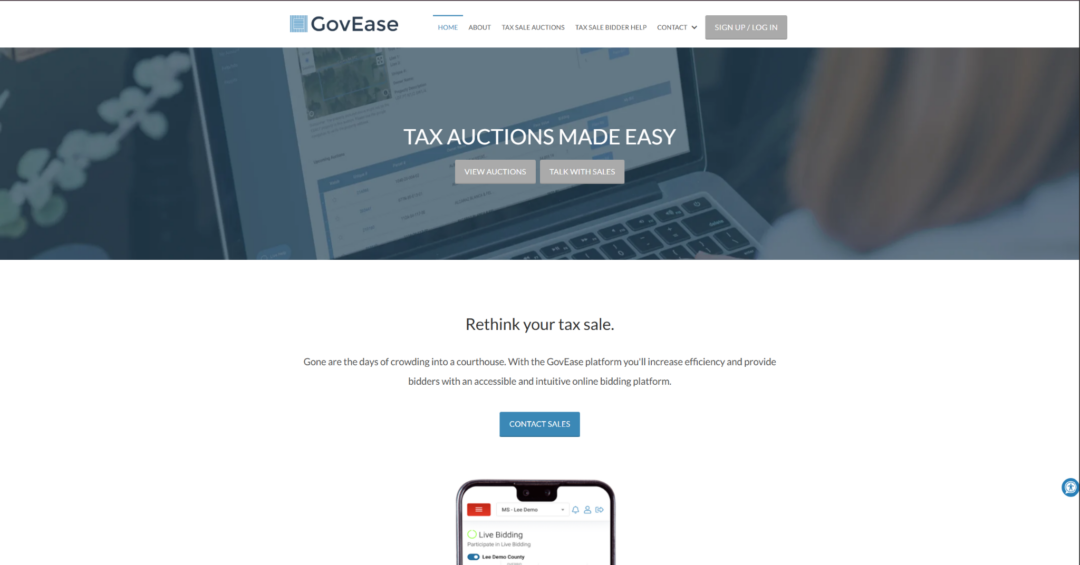
GovEase gives the list a direct tax sale auction angle. It is used for online tax lien and tax deed sales, which makes it more relevant here than a general foreclosure listing site. Users may find county-level sale schedules, bidding rules, bidder training, and auction materials depending on the sale. The platform becomes more important when the user moves from general research into specific tax sale procedures. It should still be treated as an auction access point, not a shortcut around due diligence.
Tax lien and tax deed sales can differ heavily by state and county. Bidders may need to understand deposits, registration steps, redemption rules, overbids, deed procedures, and payment deadlines. GovEase can help users reach the auction environment, but local research still matters. Parcel review should include ownership, assessed value, property condition, liens, sale documents, and county instructions. GovEase makes the most sense when the user is ready to study active tax sale auctions.
GovEase is built around tax sale participation and sale review. Users should read county instructions before bidding because the rules can change by location:
- Online tax lien and tax deed auction access;
- County-level sale pages and auction schedules;
- Bidder training and support materials;
- Pre-bidding or auction participation, where available;
- Useful source for investors studying active tax sales.
GovEase becomes useful when the research moves from property screening into tax sale rules and auction participation. It gives users a clearer path into the sales process, but the property checks still sit with the bidder.
3. RealAuction
RealAuction provides online auction software for tax, foreclosure, and sheriff sale processes.
RealAuction belongs in this Top 7 because many county sale processes run through specialized auction software. Its products are tied to delinquent tax liens, tax certificates, foreclosures, sheriff sales, land, and related online auction processes. That makes it different from a normal property search website. Users may meet RealAuction when researching county-specific tax certificate, tax deed, foreclosure, or sheriff sale pages. The platform is more about official sale infrastructure than casual browsing.
The value of RealAuction depends on the county or sale connected to it. Users may need to review auction calendars, bidder registration steps, parcel details, deposits, and payment rules. A property appearing through an auction system still requires independent checks. Title, occupancy, liens, taxes, and property condition can change the risk profile. RealAuction matters when the user wants to follow formal public-sale procedures online.
RealAuction helps when the search reaches county-backed auction pages. The platform should be treated as a sales access point, not a full investment analysis tool:
- Tax lien and tax certificate auction software;
- Tax deed and foreclosure sale support;
- Sheriff sale and public auction infrastructure;
- County-connected auction calendars and sale pages;
- Useful source for formal online sale participation.
RealAuction can help users reach official auction processes. The research still has to happen around the property, county rules, and sale terms.
4. CivicSource
CivicSource is a property auction source tied to tax-distressed and adjudicated real estate.
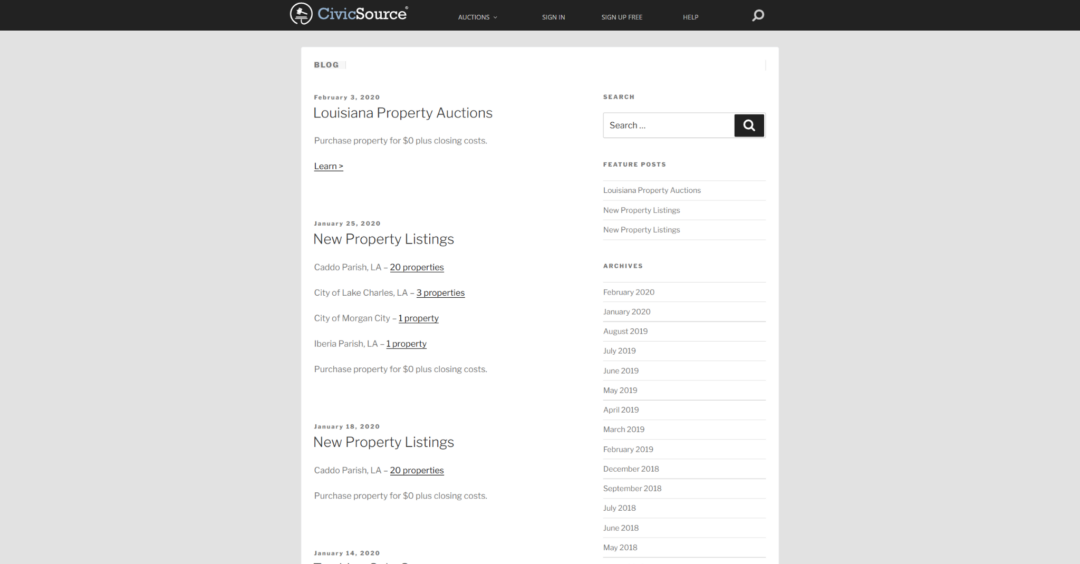
CivicSource adds a tax-distressed property angle to the article. It can include adjudicated property auctions and public-sale listings in certain markets. These properties can sit outside the normal foreclosure listing path because they may involve unpaid taxes, public ownership routes, or local adjudication rules. That makes CivicSource relevant for users who want public-sale inventory beyond common foreclosure portals. The key is to treat every listing as a starting point for research, not as a ready-made deal.
CivicSource can give users access to auction property information, maps, watch lists, and sale materials where available. Users still need to understand the local sale process before bidding. Tax-distressed property research should include title, redemption rights, property condition, closing costs, and local obligations. A low entry price can still hide complicated requirements. CivicSource is best used as a public-sale research source, not a shortcut.
CivicSource helps users explore tax-distressed and adjudicated property opportunities. The real work is checking the property and sale terms before bidding:
- Tax-distressed real estate auctions;
- Adjudicated property listings in supported markets;
- Auction property details and sale materials;
- Parcel map and watch list tools were available;
- Useful source for public-sale property research.
CivicSource can add useful tax-distressed inventory to the research process. Each property still needs local review before any bid.
5. LienHub
LienHub is used for tax certificate and county-held certificate access in supported counties.
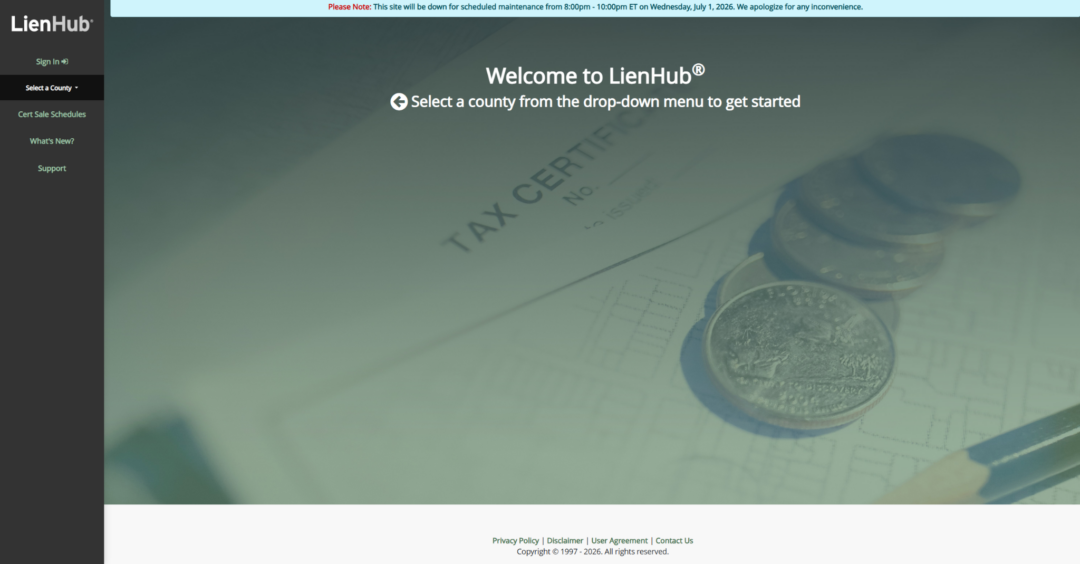
LienHub gives the article a more specific tax certificate angle. Certain counties use LienHub for tax certificate sales or county-held certificates. This makes it a better fit for users studying lien-based tax sale participation than for users looking for full property ownership from the start. Tax certificates and tax deeds are different, so users need to understand what they are buying. LienHub fits when the research focus is tax certificate access and county-held certificate review.
Tax certificate research needs careful attention to rules, deadlines, interest, redemption, and county procedures. A certificate does not always mean the investor receives the property. Users should review parcel details, owner records, certificate status, payment terms, and local instructions before participating. The process can look simple on the surface, but the legal and timing details matter. LienHub works best for users who understand the tax certificate side of the market.
LienHub is narrower than broad property auction sites. That narrow focus can help when the user specifically wants certificate-based research:
- Tax certificate auction access in supported counties;
- County-held certificate research;
- Parcel and certificate details, where available;
- Useful source for lien-based tax sale research;
- Better for tax certificate work than broad property browsing.
LienHub can support tax certificate research, but users must understand redemption and county rules before participating. It is a focused tool for a specific part of the tax sale market.
6. Tax Sale Resources
Tax Sale Resources is a research platform for tax lien, tax deed, and redeemable deed investors.

Tax Sale Resources adds a research-data layer rather than only auction access. It focuses on tax lien, tax deed, and redeemable deed research. The platform can help investors compare markets, review auction data, study sale history, and manage research more systematically. It does not replace legal, title, or county checks. It fits users who need tax sale data before deciding which counties or auctions deserve more time.
Tax sale research can become messy when users jump between many county websites. A platform like Tax Sale Resources can help organize the early research, but final checks still need to happen against official records and sale terms. Investors should review parcel data, values, liens, environmental notes, and previous sale history where available. Coverage and data quality should also be checked before relying on any research platform. Tax Sale Resources works best when the user wants a more organized tax sale research process.
Tax Sale Resources is more about research and portfolio screening than one single auction page. It can help users compare opportunities before they go deeper:
- Tax lien, tax deed, and redeemable deed research;
- Nationwide tax sale data;
- Auction history and market comparison support;
- Property reports and research filters;
- Useful source for organized tax sale screening.
Tax Sale Resources can help users narrow tax sale research before they spend time on county-specific sale pages. It gives the search more structure before the user moves into official sale documents.
7. RealEstateSales.gov
RealEstateSales.gov is the federal marketplace for surplus real property sales.

RealEstateSales.gov gives the list a federal public property angle. GSA sells surplus federal real property to the public through competitive sales. This is different from tax liens, tax deeds, and foreclosure sources because the inventory comes through federal surplus property channels. Properties may appear across different states and territories depending on active sales. RealEstateSales.gov is relevant for users who want public property research beyond county tax sale platforms.
Federal surplus property sales can involve special documents, registration rules, deposits, inspection limits, and sale terms. Users should review the invitation for bids, parcel information, title materials, environmental notes, and closing requirements before bidding. Federal property should not be treated as more easily available than other public-sale inventory. The main value is access to a separate source of public real estate. RealEstateSales.gov expands the article beyond county tax sale research.
RealEstateSales.gov is useful when the user wants to research surplus federal real property. It should be checked differently from tax lien or tax deed sources:
- Surplus federal real property sales;
- Competitive public sale process;
- Property listings across supported states and territories;
- Sale documents, bidder requirements, and property materials;
- Useful source for public property research outside county tax sales.
RealEstateSales.gov gives users a separate public-property source. Every listing still needs careful review before bidding.
Final Thoughts
Tax sale and public property research usually start with rules, not listings. A property can look interesting on the surface, but the real question is how the sale works, what claims may exist, and what the bidder is actually buying. ForeclosureHub gives investors a useful first layer for checking distressed-property context before they move into tax sale platforms, county systems, or federal surplus listings. GovEase, RealAuction, CivicSource, LienHub, Tax Sale Resources, and RealEstateSales.gov each cover a different part of that public-sale path. The smartest approach is to slow down, read the sale terms, check the records, and treat every listing as a research file before making any move.